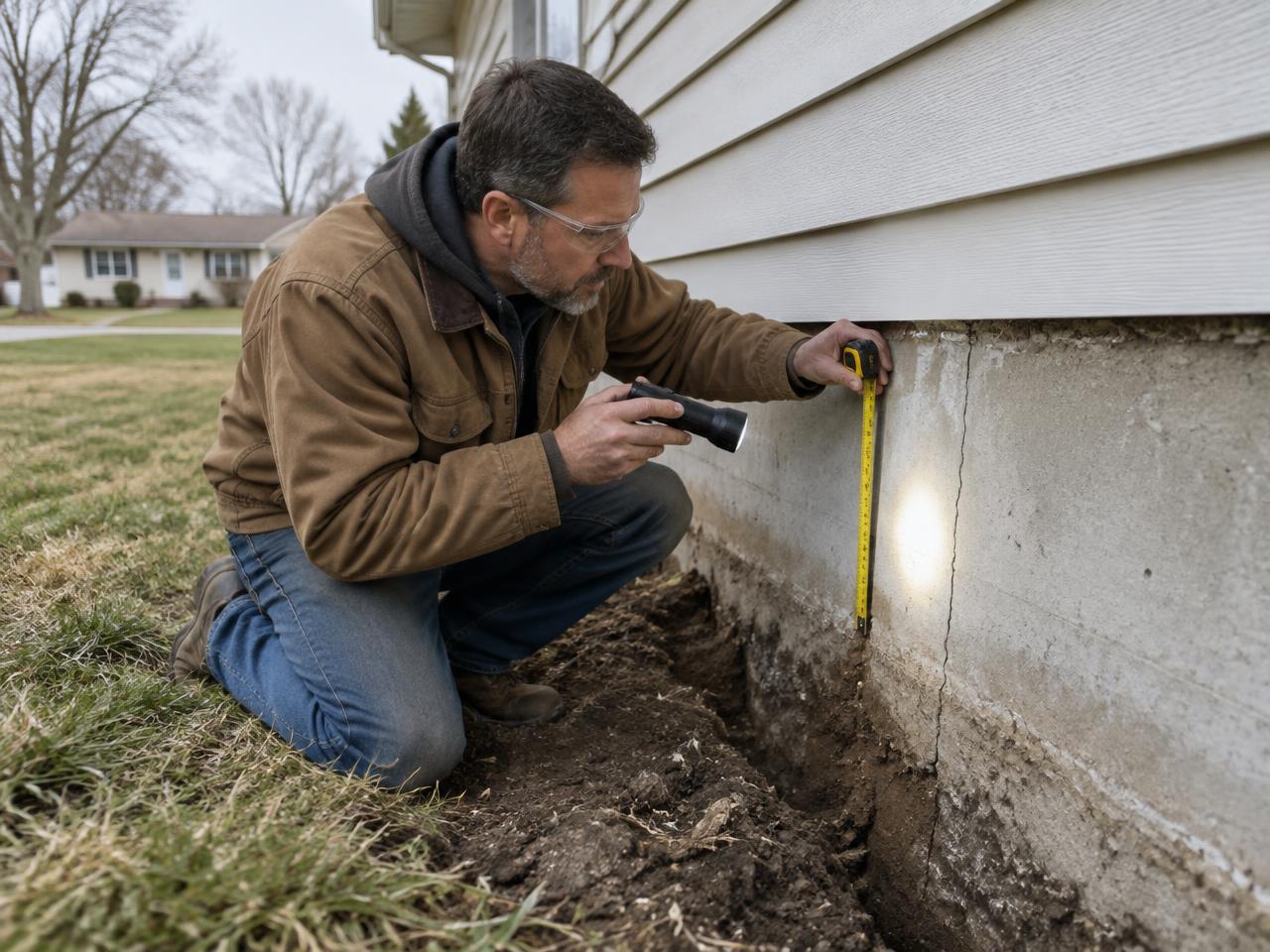
Where crawl space moisture comes from
Bare soil constantly releases water vapor into the space above it. In Topeka summers, warm, humid outdoor air entering through vents meets cooler crawl space surfaces and condenses on ducts, pipes and the underside of the subfloor. Clay soils that drain slowly, gutters that discharge next to the foundation, and grading that slopes toward the house can add standing water during wet seasons.
Water vapor moves by diffusion from damp areas toward drier ones and with air currents through the house's stack effect, so crawl space air ends up in living spaces. Musty odors upstairs, cupping hardwood floors and high indoor humidity often trace back to the crawl space.
Wood moisture thresholds
The USDA Forest Products Laboratory's Wood Handbook explains that decay fungi need wood moisture content above the fiber saturation range to grow, and a practical rule of thumb is to keep framing below about 20% moisture content. Dry interior framing usually sits well below that. Contractors measure joists, beams and sill plates with a moisture meter and probe suspect areas for softness before recommending repairs.
Vapor barriers vs. full encapsulation
A basic ground vapor barrier covers the soil with polyethylene sheeting and reduces vapor from the ground. Full encapsulation goes further: a thicker reinforced liner on the floor, up the walls and around piers, sealed seams, sealed vents and rim joists, and active humidity control with a dehumidifier or conditioned air. The International Residential Code permits unvented crawl spaces when the ground is covered with a vapor retarder and the space is conditioned or mechanically ventilated, so sealing vents is a recognized approach, not a shortcut.
Encapsulation is not a fix for flooding. If water pools in the crawl space, drainage and possibly a sump should be addressed first, or the liner simply hides a puddle.
Structural repairs and floor leveling
Sagging floors over a crawl space usually come from beams spanning too far between supports, joists weakened by decay or old notching, or support posts sitting on soil or undersized pads that have settled. A common fix is adjustable steel support columns set on engineered or poured footings beneath the beam. Supports are tightened gradually over time rather than jacked up all at once, which helps avoid cracking drywall and tile above.
Damaged joists can be sistered with new lumber or replaced. Rotted sill plates may need replacement in sections. Where the perimeter foundation itself is settling, piers may be needed in addition to interior supports.
Pests, mold and air quality
Damp crawl spaces attract termites, carpenter ants and rodents. Visible mold on joists should be evaluated and, where needed, remediated before encapsulation. Once the space is dry and sealed, it is easier to inspect and less hospitable to pests.
Access and inspection
Many Topeka crawl spaces are shallow, with 18 to 30 inches of clearance, and access can be limited. Contractors evaluate clearance, entry points, ductwork and plumbing that will affect how a liner or supports can be installed. Photos and video from the crawl space should be part of your estimate.
When to call
Request an assessment if you notice bouncy or sloping floors, musty odors, condensation on ducts, visible mold, standing water, or pest activity in the crawl space. Early moisture control is far less costly than replacing framing later.
Common warning signs
- Musty odors
- Sagging floors
- Standing water or mold under the house
What you might observe and what it may indicate
| Observation | May indicate |
|---|---|
| Musty odor in rooms above | High crawl space humidity; possible mold |
| Sweating ducts or pipes in summer | Humid air condensing on cool surfaces |
| Bouncy or dipping floors | Overspanned beams, decayed joists, or settled posts |
| Cupping hardwood floors | Moisture moving up from below |
| Standing water after rain | Grading or drainage issue to fix before encapsulation |
Observations suggest possibilities only; they are not a diagnosis.
Possible causes and risk factors
- Ground moisture
- Poor ventilation
- Inadequate supports
How a professional assesses it
The contractor checks moisture levels, wood condition, supports and drainage.
Investigation checklist
- Relative humidity and wood moisture readings
- Joist, beam and sill plate condition
- Post supports and footing pads
- Standing water, drainage and grading
- Vents, rim joists and duct condition
- Clearance and access points
- Mold and pest evidence
Repair methods
Support posts
Adjustable steel supports.
Moisture control
Vapor barriers, drainage, dehumidification.
Vapor barrier vs. full encapsulation
| Factor | Ground vapor barrier | Full encapsulation |
|---|---|---|
| Coverage | Plastic sheeting on soil only | Sealed liner on floor, walls and piers |
| Vents | Usually left open | Sealed; air conditioned or dehumidified |
| Humidity control | Partial | Active, with dehumidifier |
| Typical cost | Lower | $2–$10 per sq ft (Angi) |
What affects the scope and cost
- Size
- Wood replacement
- Access
Cost guidance
| Item | Low | High | Unit |
|---|---|---|---|
| Basic encapsulation | $2 | $4 | per square foot |
| Encapsulation with cleanup, repairs and extras | $3 | $10 | per square foot |
| Typical encapsulation project | $1,500 | $15,000 | per project |
Usually included
- Vapor barrier on floor and walls
- Sealing vents and seams
Often extra
- Dehumidifier (sometimes extra)
- Wood replacement and structural supports
- Mold remediation
- Drainage or sump
National figures, not quotes. Sources: Angi, “How Much Does Crawl Space Encapsulation Cost?”; This Old House, “How Much Does Crawl Space Encapsulation Cost?”. Topeka prices vary with your home, access and scope; the participating contractor provides a written estimate after an assessment.
No repair can be recommended from symptoms alone. Major structural issues may call for a structural engineer's evaluation.
Frequently asked questions
Should crawl space vents be open or closed?
Building science and the IRC support closed, conditioned crawl spaces when done correctly with a sealed vapor retarder and humidity control. Closing vents without those steps can make moisture worse.
Do I need a dehumidifier after encapsulation?
Most encapsulated crawl spaces need active humidity control, either a dehumidifier or conditioned air from the HVAC system.
Can sagging floors be leveled completely?
Floors can often be improved significantly with gradual adjustment, but full leveling depends on how much the framing above can tolerate without new cracks.
How thick should a crawl space liner be?
Basic vapor barriers are commonly 6-mil polyethylene; encapsulation liners are often thicker reinforced material. Your contractor should specify the product.
Is mold in a crawl space dangerous?
Mold can affect indoor air quality. Have it evaluated, and fix the moisture source so it doesn't return.
Can you tell me what's wrong from a photo?
Photos help a contractor prepare, but foundation and water problems can't be reliably diagnosed from pictures alone. An on-site assessment looks at measurements, drainage, soil conditions and the structure as a whole.
How much will it cost?
Pricing depends on the size of the problem, access, the repair method and site conditions. This website doesn't publish prices; the participating contractor provides a written estimate after assessing your property.
About this page
- Written by:
- Topeka Foundation Repair editorial team
- Technical reviewer:
- Pending technical review
- Published:
- Last reviewed:
- Status:
- Awaiting technical review
Sources
- Wood Handbook (FPL-GTR-282): moisture content and decay — USDA Forest Products Laboratory
- International Residential Code, Chapter 4: Foundations (drainage, damp-proofing, under-floor space) — International Code Council
- How Much Does Crawl Space Encapsulation Cost? — Angi
- How Much Does Crawl Space Encapsulation Cost? — This Old House
- Web Soil Survey (Shawnee County, KS soil map units and shrink-swell ratings) — USDA Natural Resources Conservation Service